
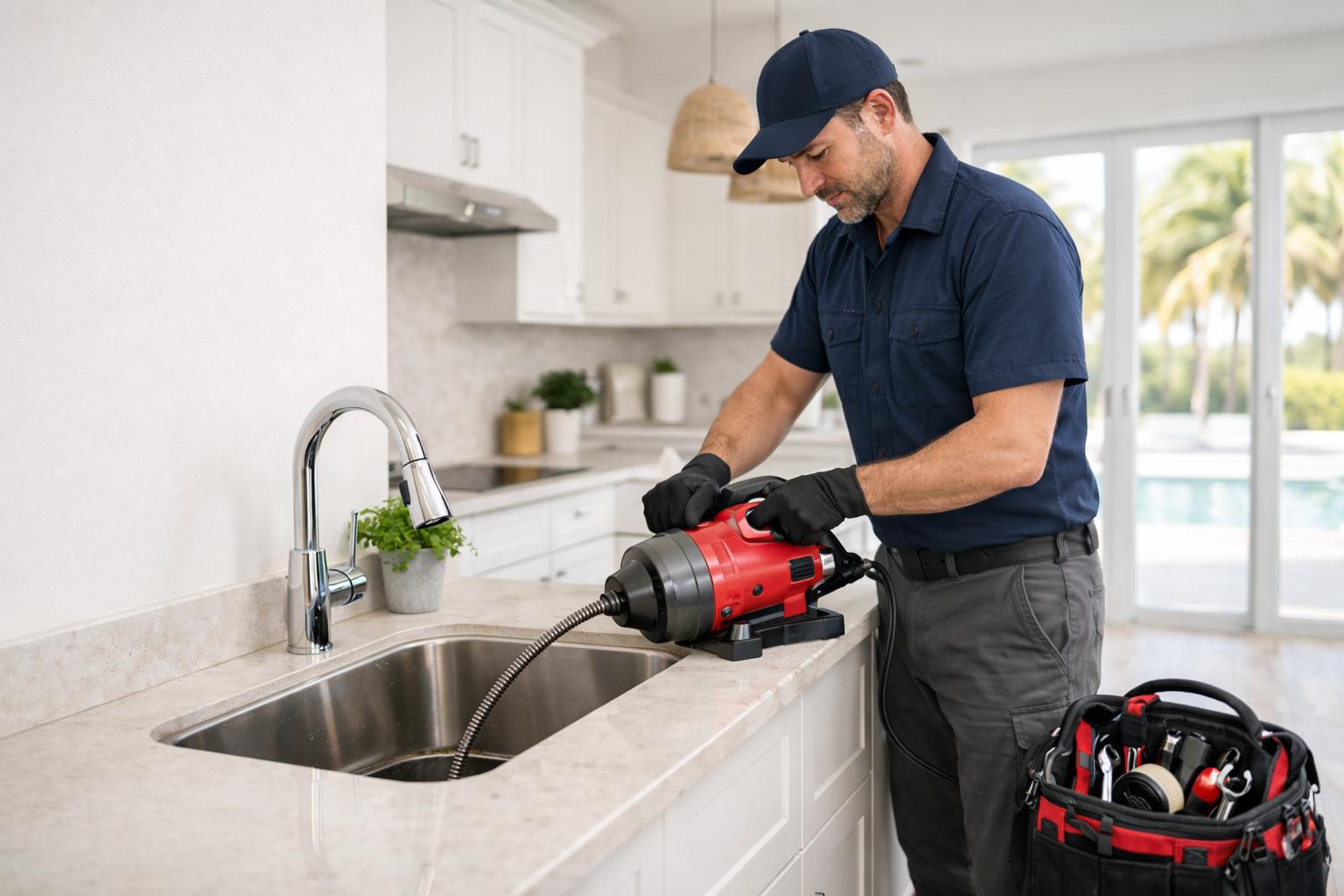
Residential and commercial drainage failures originate from mechanical obstructions, grease saponification, scale mineralization, or root intrusion inside the building drain-waste-vent (DWV) piping network. Professional plumbing contractors employ distinct mechanical methodologies matched to the pipe material, pipe diameter, and blockage severity.
Struggling with Recurring Drain Backups or Slow Drainage?
Connect with participating drain cleaning specialists equipped with high-definition video scoping and commercial hydro-jetters.
Primary Methodologies in Modern Drain Service
1. Motorized Mechanical Augering (Drain Snaking)
Utilizing flexible continuous-wound steel cables up to 100 feet in length, motorized drain machines spin specialized cutting blades, retriever corkscrews, or grease augers. Augers excel at punching an immediate pilot channel through soft clogs, paper obstructions, and hair clumps in branch lines measuring 1.5 inches to 3 inches in diameter.
2. High-Pressure Hydro-Jetting (3,000 to 4,000 PSI)
While an auger merely bores a hole through a blockage, hydro-jetting restores the full interior pipe circumference. By propelling specialized rear-facing and forward-cutting water jets at 15 to 20 gallons per minute, hydro-jetters scour mineral scale, emulsify stubborn commercial kitchen fats, oils, and grease (FOG), and shred invasive tree hair roots from 4-inch to 8-inch main building drains.
3. High-Definition CCTV Video Pipe Inspection
Prior to executing high-pressure jetting or structural remediation, contractors insert fiber-optic self-leveling cameras with integrated 512 Hz radio transmitters down the cleanout to verify pipe integrity.